
12 Questions Every Parent Should Ask a Baseball Coach Before Joining a Team
The best questions to ask a baseball coach before your kid joins a team are the ones that pin down the things families actually fight about by March: how playing time and positions are decided, what the full year costs in writing, how many weekends you’ll be on the road, who is really coaching, how pitchers’ arms are protected, and how the coach handles hard conversations. Ask them after the offer and before the deposit, on a phone call, and listen less for the “right” answer than for whether you get a specific one.
That last part is what this guide is built around. Most coaches will say the right words. So for each of the 12 questions below, you’ll see why it matters, what a straight answer tends to sound like, and what a dodge sounds like. If you want the bigger decision framework — watching a practice, mapping the drive, scoring the offer — start with how to evaluate a select baseball team before you say yes. This piece is the conversation itself.

When to ask (and how not to sound like a problem parent)
In North Texas, the offer usually lands fast — a text the night of a fall tryout, sometimes with a deposit deadline a few days out. That’s the window. Before the offer, a coach is still evaluating your kid and long questions can feel like lobbying. After the deposit, you’ve lost most of your leverage. If tryout week itself is still a blur, here’s how select baseball tryouts actually work.
- Ask for 15 minutes on the phone, not a group-text thread. Tone gets lost in text, and some answers only come out in conversation.
- Lead with interest: “We’re excited about the offer and want to make sure we can commit for the whole season.” Good coaches hear that as a family taking the commitment seriously.
- Ask the money and schedule questions in writing afterward. A short follow-up email (“Just so I have it, can you send the fee breakdown and tournament plan?”) protects everyone.
- Bring your player into one or two questions if they’re 11 or older. How a coach talks to your kid tells you plenty.
You don’t need all 12 on one call. If you only get to four, make them 1, 4, 6 and 10: playing time, cost, travel and arms.
Playing time and roles
1. “How do you decide playing time and positions at this age?”
Every coach says they develop every kid. This question asks how. At younger ages (roughly 9U–11U), plenty of good programs rotate positions and spread innings. By 12U–14U, roles usually tighten. Either can be fine. What breaks families is a soft promise in October that turns into two innings in right field by April.
A straight answer sounds like: “At 10U we rotate everybody through the infield and try to keep innings close over a weekend. Pitching and catching go to kids who’ve shown they can handle it. In bracket play I’ll lean on my best nine, and I’ll tell parents that up front.”
A dodge sounds like: “He’ll play a lot.” “We’ll see how it shakes out.” “The best players play” — with no explanation of how “best” gets decided or when it gets re-checked.
2. “If my kid’s role changes mid-season, how and when will I hear about it?”
Roles change. A kid gets passed at shortstop, a new pitcher joins in January, a player hits a slump. The question isn’t whether it happens; it’s whether you find out from the coach or from the lineup card in a Saturday morning pool game.
A straight answer sounds like: “I’ll talk to the player first, then give you a call. If he wants to earn the spot back, I’ll tell him exactly what I need to see.”
A dodge sounds like: “Lineups are lineups.” Or any version of “parents don’t talk to me about playing time, ever,” with no other route for your player to ask, either.
3. “What’s your 24-hour rule, and who do I contact with a concern?”
Most healthy programs have one: no playing-time conversations right after a game, and a clear way to raise issues once everybody has cooled off. If there’s no rule, the default becomes parking-lot arguments.
A straight answer sounds like: “Wait a day, then text me and we’ll set up a call. Your son is always welcome to ask me directly what he needs to work on.”
A dodge sounds like: “If you have a problem, there are other teams.” That’s a culture answer, not a policy answer.
Money and the fine print
4. “Can you send the full-year cost in writing — and what’s not included?”
The team fee is the number on the flyer. The real number includes uniforms, tournament entries the fee doesn’t cover, facility or cage fees, required fundraising, and hotel weekends. Our breakdown of how much select baseball costs in North Texas is a good sanity check against whatever you’re quoted.
A straight answer sounds like: “Here’s the sheet: the fee covers practices and these tournaments; uniforms are extra; we usually add one or two events in spring and I’ll tell you before we register.”
A dodge sounds like: “About the same as everybody else.” “We’ll figure out spring later.” A deposit request before any written number.
5. “What happens to what we’ve paid if we leave, get cut, or he gets hurt?”
Nobody wants to ask this on day one, which is exactly why it causes trouble on day 90. A broken wrist in February or a move across town is a normal family event. You want to know the policy before it matters.
A straight answer sounds like: “Fees are non-refundable after this date, but if he’s injured we’ll credit uniforms and pro-rate what we can. Here’s the policy.” Even a strict policy is fine if it’s clear.
A dodge sounds like: “That never happens.” Or no written policy at all, followed by a surprise bill after you leave.
Time, travel and the weekly grind
6. “How many tournaments are planned, and how many are overnight?”
In DFW, “local” can still mean a Friday-night drive up the Tollway, down 75 or across 121, plus hotel weekends somewhere else in the state or across the Red River. The schedule decides your family’s spring more than the logo does: siblings’ games, work Fridays, church, and the grocery budget all live inside it.
A straight answer sounds like: “We’re planning about this many tournaments this fall, mostly in the Metroplex, and two or three overnights in the spring. I’ll post the calendar by this date.”
A dodge sounds like: “We go wherever the competition is.” Fine for some families — but only if you know what that means before you sign.

7. “What does a normal practice week look like — nights, length, and where?”
Practice is where development actually happens. A team that practices once a week at a cage across the county is a different commitment from one that practices twice a week ten minutes from your house. Ask what a typical practice looks like at this age, too.
A straight answer sounds like: “Tuesday and Thursday, 6 to 8, at this field. Fall is fundamentals; winter is cage work. You’re welcome to come watch.”
A dodge sounds like: “We practice when we can get field time.” Or a schedule that’s mostly paid lessons sold as team practice.
Who’s coaching and who’s on the roster
8. “Who’s actually coaching — and is your own kid on the team?”
Most youth coaches are parents, and that’s fine. Some of the best coaches in the area coach their own kids. You’re not asking in order to accuse anybody. You’re asking because daddy ball is real, and how a coach talks about it tells you whether they’ve thought about it. Also ask who runs practice: the head coach, assistants, or a rotating cast of dads. Our list of select baseball coach red flags covers the patterns worth watching.
A straight answer sounds like: “Yes, my son plays second. My assistant coach handles his evaluations, and I’d rather sit him than have people wonder.”
A dodge sounds like: Defensiveness. A good coach with a kid on the roster has heard this question before and has an answer ready.
9. “Are you still recruiting, and do you use guest players?”
Two things change a roster after you commit: new players added through winter, and guest players picked up for big tournaments. Both are common in travel ball. Both can quietly move your kid down the depth chart. You’re asking how many spots are really settled.
A straight answer sounds like: “We’re at 11 and might add one pitcher. We pick up a guest arm if we’re short on pitching for a big weekend, and I tell the team when we do.”
A dodge sounds like: “We’re always looking for talent.” Translation: your spot is open for bidding all year.
Arms and safety: questions with real benchmarks
These two questions are the easiest to grade, because there are published standards to check the answer against.
10. “How do you track pitch counts and rest, and do you follow Pitch Smart?”
MLB and USA Baseball’s Pitch Smart guidelines set daily pitch limits by age — 75 for ages 9–10, 85 for 11–12 and 95 for 13–14 — plus required days of rest that grow with the pitch count. For ages 9–12, they also advise against pitching on three straight days, against playing catcher while not pitching, and against playing for multiple teams at the same time. Pitch Smart is blunt about whose job this is: ultimately the parent and the player, because kids often play for more than one team in a year.
A straight answer sounds like: “Someone in the dugout tracks every pitch, we follow Pitch Smart or the tournament’s pitch rules, whichever is stricter, and I’ll ask you whether he’s thrown for anybody else that week.”
A dodge sounds like: “He’ll tell us when he’s tired.” “We go by innings.” No answer to who keeps the count.

11. “Is every adult on staff background-checked, and what’s your policy on texting players and rides?”
This one feels awkward. Ask it anyway. The U.S. Center for SafeSport’s Minor Athlete Abuse Prevention Policies (MAAPP) require that electronic messages between adults and minor athletes stay open and transparent, with a parent or another adult copied, and that one-on-one transportation be avoided unless a parent has given written consent in advance. Independent travel teams aren’t always bound by those rules, but they make a good yardstick.
A straight answer sounds like: “All coaches are background-checked through the org. Team messages go through the app with parents on them, and no coach rides alone with a player.”
A dodge sounds like: Irritation that you asked. Programs that take safety seriously are glad parents check.
Fit and honesty
12. “Why is this the right level for this group — and can I talk to a parent from last season?”
AA, AAA and Major mean different things at different events, so the letter alone tells you little. A coach who can explain why this roster belongs in this bracket has thought about development. Then ask to talk to a current or former parent. Bonus points if the coach offers you a family that left on good terms.
A straight answer sounds like: “We played AAA in the fall to get the kids competitive innings; we’ll move up if the pitching holds. Here’s the number for two parents from last year.”
A dodge sounds like: Talk about the letter before talk about the kids. Or no references, ever.
One question to ask yourself afterward
Hang up and ask: Did I get specifics, or did I get vibes? A coach can be tough, quiet, intense or not great on the phone and still be a great fit. What’s hard to live with for a whole season is vagueness about time, money and roles. Good coaches will sometimes even say “honestly, this might not be the right team for him” when it isn’t. That’s the kind of honesty you want on your side in March.
If you’d like a script, this works as a follow-up text the day after the call:
“Thanks again for the offer — we’re excited. Before we send the deposit, could you email the full-year fee breakdown, the planned tournament schedule, and the refund policy? We’ll get you a firm answer by [day].”
Then save the answers. If things change mid-season, you’ll want the original conversation in writing. If they change a lot, our guide to whether to stay or switch select baseball teams walks through what to do next.
Keep comparing
Shopping more than one offer? Run these questions past every coach on your list, then compare programs in our North Texas select baseball organizations directory and track dates in the 2027 North Texas tryout tracker. For the bigger picture, the Ultimate Guide to Select Baseball in North Texas and the rest of NTX Select Baseball cover costs, classifications and life on the tournament circuit.
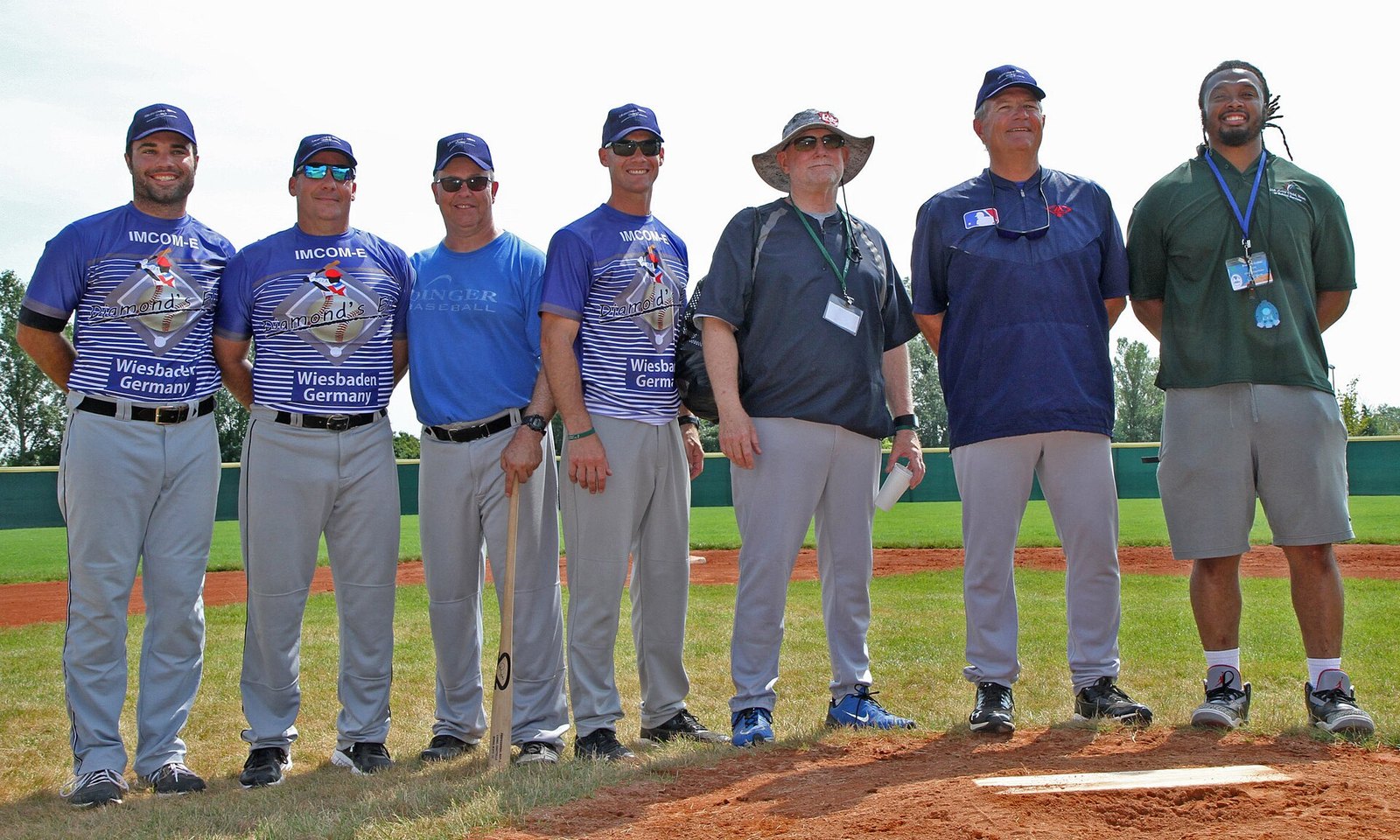
Header collage image sources via Wikimedia Commons: Joint Base Andrews Naval Air Facility (public domain), U.S. Army Corps of Engineers Europe District (public domain), Paul Budd (CC BY-SA 3.0), U.S. Army Corps of Engineers Europe District (public domain).