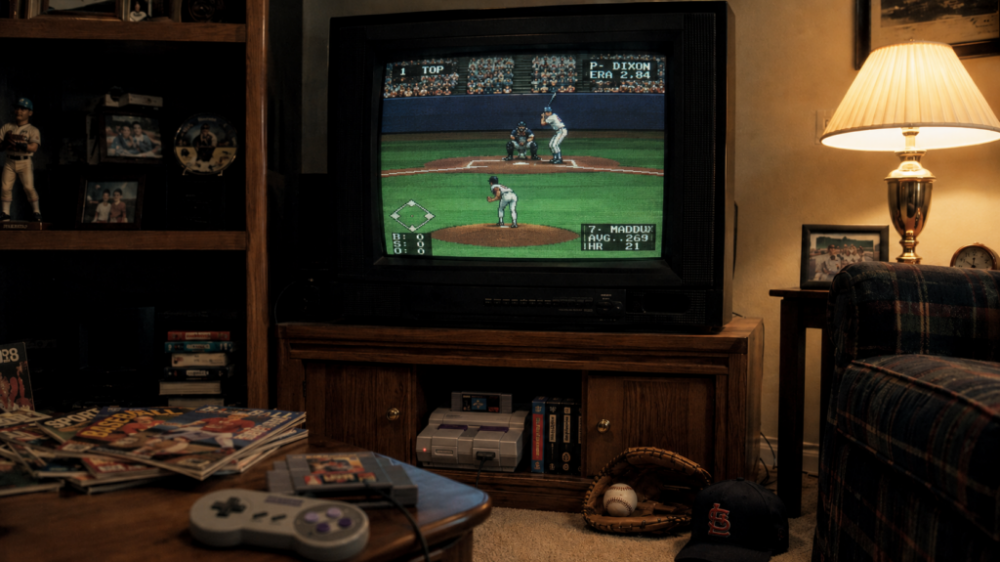
The Best Baseball Video Games of All Time: A Parent’s Guide to the Digital Diamond
Baseball has always been a game of timing, patience, angles, failure, adjustment, and obsession over tiny details.
So naturally, it makes a great video game.
From pixelated infielders chasing ground balls on early consoles to modern simulations that track pitch confidence, swing timing, player development, and franchise budgets, baseball video games have always done something special: they turn the mental side of the game into something kids can see, feel, and play.
For parents in the select baseball world, that matters.
Because not every baseball lesson has to come from a $95 private hitting session, a weekend tournament in 104-degree heat, or a coach yelling “hands back” from behind a bucket of balls. Sometimes, baseball IQ can be built on a couch, with a controller in hand, talking through pitch selection, base running, defensive positioning, and why you absolutely should not swing at a curveball in the dirt.
Baseball video games are not just nostalgia. They are digital diamonds. They are part arcade, part classroom, part time machine, and part father-son bonding machine.
Here are some of the greatest baseball video games ever made — and why they still matter for young players today.
Why Baseball Works So Well as a Video Game
Baseball translates beautifully to video games because the sport is already built around isolated moments.
Every pitch is its own little battle.
Pitcher vs. hitter.
Runner vs. catcher.
Infielder vs. bad hop.
Parent vs. the internal rage of watching another kid miss the cutoff man.
The sport is full of repeatable situations, statistics, and strategy. That makes it perfect for digital gameplay. A good baseball video game teaches timing, anticipation, risk management, and decision-making. A great one makes those lessons feel like fun.
For young athletes, especially select baseball players, these games can help reinforce real baseball concepts:
Pitch sequencing
Swing timing
Base running decisions
Defensive positioning
Situational awareness
Lineup construction
Roster management
Patience at the plate
And for parents, they offer something even better: a way to share baseball without turning every interaction into a coaching session.
Because sometimes the best way to teach the game is to play the game.
The Best Baseball Video Games of All Time
5. Major League Baseball — Intellivision, 1980
Before modern graphics, licensed rosters, online play, and 99-rated Diamond Dynasty cards, there was Major League Baseball on Intellivision.
Released in 1980, this game was primitive by today’s standards, but it was wildly ambitious for its time. It gave players control of full nine-man teams, used a unique circular direction pad for pitching and movement, and allowed pitchers to throw different types of pitches based on directional inputs.
That may not sound impressive now, but in 1980, this was basically baseball sorcery.
The most important innovation was defensive control. Players could actually select fielders and move them toward the ball. That seems obvious today, but at the time, it was a huge leap forward.
Of course, the game had limitations. Every batted ball behaved like a ground ball because the hardware could not properly calculate vertical ball physics. That means no towering fly balls, no diving catches in the gap, and no dad yelling “get under it!” from the couch.
Still, Major League Baseball deserves its place because it helped establish the basic structure of the baseball video game.
It proved that baseball could work on a console.
Why it matters for kids today:
This is a great history lesson. It shows young players how far gaming — and sports simulation — has come. It also strips baseball down to its most basic digital form: pitch, hit, field, run.
4. Cyber Stadium Series: Base Wars — NES, 1991
Now we get weird.
Base Wars is what happens when someone asks, “What if baseball existed in the future, but all the players were armed robots and close plays at second base were settled through hand-to-hand combat?”
Which, frankly, is a question more youth sports parents have probably asked than we care to admit.
Released for the NES in 1991, Base Wars combines traditional baseball with sci-fi combat. The story is simple: team owners get tired of paying human athletes billions of dollars, so they replace them with military robots.
A little dramatic? Sure.
Still more financially responsible than some select baseball fee structures? Also yes.
The baseball gameplay itself is surprisingly solid. Pitchers fire balls from arm cannons. Players can charge pitches, curve them mid-flight, and use different robot types with different strengths and weaknesses.
The real magic happens on close plays. Instead of a normal umpire call, the runner and fielder enter a fighting sequence. Win the fight, win the base.
Even better, robots can take damage. If a robot is destroyed, it is gone for the rest of the game. If a team loses three robots, it forfeits.
That creates a hilarious and oddly deep strategy loop. Do you spend your money on repairs? Weapons? Better players? Do you risk another close play with a damaged robot?
It is baseball, budgeting, combat, and chaos.
Beautiful nonsense.
Why it matters for kids today:
Base Wars teaches risk and reward. It also keeps kids engaged because it does not feel like a traditional sports simulation. For kids who think baseball is “too slow,” robot baseball fights can be a pretty strong opening argument.
Honorable Mention: Backyard Baseball — PC, 1997
No baseball video game list is complete without Backyard Baseball.
This is not just a game. It is a childhood memory generator.
Released in 1997 by Humongous Entertainment, Backyard Baseball captured the feeling of neighborhood pickup games better than almost any sports game ever made. Instead of massive stadiums and superstar athletes, you played on sandlots, backyards, alleys, and schoolyard fields with a cast of fictional kids.
And then there was Pablo Sanchez.
The Secret Weapon.
Pablo was short, quiet, underestimated, and absolutely ridiculous. He could hit bombs, run like a deer, and make every kid playing the game wonder why their actual Little League team did not have a 4-foot-tall destroyer of worlds batting third.
Backyard Baseball was brilliant because it made baseball approachable. It was funny, colorful, inclusive, and simple enough for young kids to understand without losing the strategic charm of the sport.
Later versions added kid versions of real MLB stars, which made the game even more magical. But the original game’s soul came from its neighborhood feel. It made baseball feel like something that belonged to everyone.
Why it matters for kids today:
Backyard Baseball is one of the best entry points for young players. It is low-pressure, charming, and easy to understand. It also reminds parents that kids do not always need the most advanced version of baseball. Sometimes they need the most joyful version.
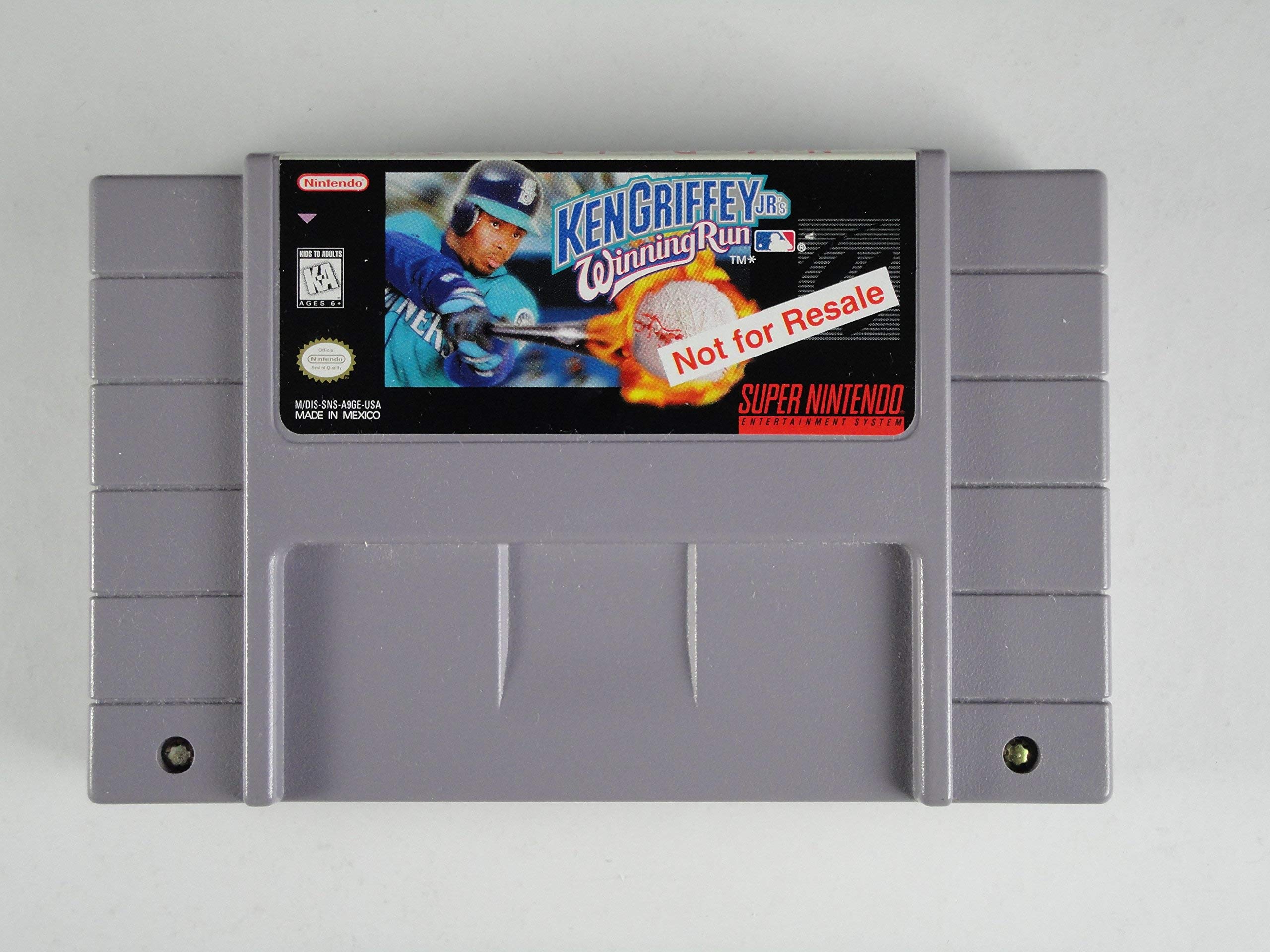
3. Ken Griffey Jr. Presents Major League Baseball — SNES, 1994
This one is sacred.
Ken Griffey Jr. Presents Major League Baseball was released for the Super Nintendo in 1994, and it remains one of the most beloved baseball games ever made.
It had real MLB teams, real stadiums, and real logos. It featured iconic ballpark details like Fenway Park’s Green Monster and the warehouse beyond right field at Camden Yards.
But because the developers did not have the players association license, Ken Griffey Jr. was the only real player in the game.
The solution?
Fake rosters filled with pop culture references.
The Boston Red Sox had players named after characters from Cheers.
The Detroit Tigers were loaded with Motown references.
The California Angels featured classic Hollywood names.
The Baltimore Orioles included nods to John Waters and Baltimore’s creative scene.
It was weird, funny, memorable, and somehow perfect.
The gameplay was simple but highly polished. Hitting was timing-based. Pitching was fast and competitive. Defense rewarded smart positioning. Power mattered. Speed mattered. Small ball mattered if you knew how to use it.
And the presentation was elite for its era. The music, animations, sound effects, and overall energy made it one of those games that still feels fun decades later.
Also, if you paused too long on the mound, the umpire would knock on the screen and yell, “Play the game, kid!”
A perfect feature. No notes.
Why it matters for kids today:
This game teaches rhythm, timing, pitch location, and defensive awareness without overwhelming young players. It is also a perfect bridge between retro arcade baseball and more serious baseball strategy.
2. MVP Baseball 2005 — PlayStation 2, Xbox, GameCube
For many baseball gaming purists, MVP Baseball 2005 is still the king.
This was EA Sports at the peak of its baseball powers. The gameplay was crisp. The pitching was innovative. The hitting felt fair. The franchise mode was deep. The mini-games were fun. And somehow, more than 20 years later, people still talk about it like it was handed down from Mount Cooperstown.
The pitching system used a golf-style meter. You selected a pitch, built power, and then had to stop the meter in the accuracy zone. That zone changed based on pitcher stamina, confidence, and pressure.
That made pitching feel like a skill.
Not just button pressing.
Not just ratings.
Actual execution.
The game also introduced the famous Hitter’s Eye mechanic, which briefly showed pitch type through color cues as the ball left the pitcher’s hand. Fastballs, breaking balls, changeups, sinkers, splitters, and knuckleballs all had different visual indicators.
For young players, this is huge.
It teaches pitch recognition. It encourages hitters to identify what is coming instead of blindly swinging because “it looked good for half a second,” which is also the official slogan of most 10U strikeouts.
The Dynasty and Owner modes were also incredible. Players could manage a franchise for decades, develop minor leaguers, deal with injuries, monitor chemistry, build stadiums, set concession prices, and run promotions.
It was baseball operations disguised as a video game.
Why it matters for kids today:
MVP Baseball 2005 is one of the best games for teaching the deeper side of baseball. Pitch recognition, timing, roster construction, player development, and situational decision-making are all built into the experience.
1. MLB The Show Series — 2006 to Present
The modern heavyweight is obvious: MLB The Show.
For current baseball fans, MLB The Show is the standard. It offers elite visuals, realistic stadiums, advanced pitching mechanics, deep franchise systems, player career modes, online competition, and an enormous amount of customization.
But for kids and parents, the best feature may be one of its simplest: Retro Mode.
Retro Mode strips the game down into a more classic arcade-style baseball experience. Instead of overwhelming players with advanced PCI placement, pinpoint pitching, card systems, menus, and mechanics, Retro Mode focuses on simple timing, basic pitching, and fast gameplay.
That makes it a perfect bridge.
Kids get the modern graphics they expect, but parents get the simple baseball gameplay they grew up with. Everybody wins. Nobody has to explain 47 different controller inputs before the first pitch.
MLB The Show also gives players a modern way to understand real baseball. Kids can learn MLB teams, players, stadiums, tendencies, ratings, pitch types, and game situations while still having fun.
Why it matters for kids today:
MLB The Show is the best modern baseball game for serious fans. Retro Mode makes it approachable for younger players, while the full game gives older kids a deep simulation that can help reinforce real baseball IQ.
What These Games Can Teach Young Baseball Players
Baseball video games are not a replacement for practice.
No kid is going to fix his swing path by hitting a button on a controller. No shortstop is going to learn footwork from a Super Nintendo sprite. No pitcher is going to develop command by throwing pixelated curveballs in Base Wars.
But baseball games can teach the mental side of the sport.
They can help kids understand:
1. Pitch Sequencing
Why throw a changeup after two fastballs?
Why work outside after jamming a hitter inside?
Why does missing over the middle get punished?
Video games make those lessons immediate.
2. Swing Timing
Even arcade baseball games teach kids that early, late, and on-time swings produce different results. That is a useful concept for young hitters.
3. Situational Baseball
Runner on third, less than two outs.
Do you swing away?
Bunt?
Hit behind the runner?
Try to steal?
Play the infield in?
Games let kids test those choices without the pressure of a real game.
4. Defensive Awareness
Young players can start to understand why speed matters in center field, why arm strength matters at shortstop, and why positioning changes based on game situation.
5. Patience
A good baseball game rewards discipline. Swing at everything and you usually lose. Wait for your pitch and you usually hit better.
Shocking concept. Someone alert every 9U dugout.
A Parent’s Guide to Introducing Kids to Classic Baseball Games
The trick is not just handing your kid a device with 7,000 retro games and expecting magic.
That usually creates choice paralysis. Kids bounce around for two minutes, say everything looks old, and go back to YouTube.
Instead, treat retro baseball games like a curated baseball playlist.
Start with 3 to 5 Games
Do not overload them.
A good starter list might be:
Backyard Baseball
Ken Griffey Jr. Presents Major League Baseball
Baseball Stars
MVP Baseball 2005
MLB The Show Retro Mode
That gives them variety without drowning them.
Give Them Challenges
Kids respond well to goals.
Try simple challenges like:
Hit a home run with Ken Griffey Jr.
Win a three-game series
Throw a complete game
Steal two bases in one game
Win with the worst team
Draft a Backyard Baseball team without Pablo Sanchez, if you are emotionally strong enough
The challenge makes the game feel purposeful.
Play With Them
This is the real win.
The best part of baseball video games is not the game. It is the conversation around the game.
You can talk about why you threw that pitch.
Why you took the extra base.
Why you moved the runner over.
Why you did not swing 3-0.
Why you absolutely should have swung 3-0 because that pitch was a meatball.
That is where the learning happens.
Use Games as a Break From Pressure
Select baseball can be intense.
Practices. Lessons. Tournaments. Rankings. Tryouts. Team drama. Parent drama. Daddy ball. Batting order politics. The whole traveling circus.
Baseball video games give kids a way to enjoy the sport without the pressure.
No coach.
No GameChanger.
No gate fee.
No bracket math.
No parent group text.
Just baseball.
That has value.
Best Baseball Video Games for Different Ages
Best for Younger Kids: Backyard Baseball
Simple, funny, colorful, and easy to love. This is the best entry point for younger players.
Best for Retro Parents: Ken Griffey Jr. Presents Major League Baseball
This is the one that will make dads say, “You have no idea how good this was,” approximately 19 times.
Best for Baseball IQ: MVP Baseball 2005
Great for older kids who are starting to understand pitching strategy, roster management, and situational baseball.
Best Modern Option: MLB The Show
The current standard. Great for serious baseball fans, especially if you use Retro Mode for younger players.
Weirdest and Most Fun: Base Wars
Robot baseball fights. Enough said.
Final Thoughts: The Digital Diamond Still Matters
Baseball video games are more than nostalgia.
They are a bridge.
A bridge between parents and kids.
A bridge between old-school baseball and modern baseball.
A bridge between fun and strategy.
A bridge between loving the game and understanding the game.
For select baseball families, that matters.
Because the goal should not be to turn every baseball moment into another performance review. Sometimes the best thing you can do is sit down, hand your kid a controller, and let the game become fun again.
Baseball is hard enough.
The digital diamond gives kids a place to fail, learn, laugh, compete, and fall in love with the sport all over again.
And honestly, if your kid learns not to swing at a changeup in the dirt because Pablo Sanchez took one for ball four in Backyard Baseball, that still counts as player development.
TL;DR
Baseball video games are more than nostalgia. They can help young players learn pitch recognition, timing, situational awareness, base running, and strategic thinking in a fun, low-pressure environment. Classics like Backyard Baseball, Ken Griffey Jr. Presents Major League Baseball, MVP Baseball 2005, Base Wars, and MLB The Show all offer different ways for kids and parents to connect with the game. For select baseball families, the digital diamond can be a surprisingly useful tool for building baseball IQ — and a much-needed reminder that baseball is supposed to be fun.