Best Youth Catcher’s Gear: Sizing, Sets and What Not to Overbuy
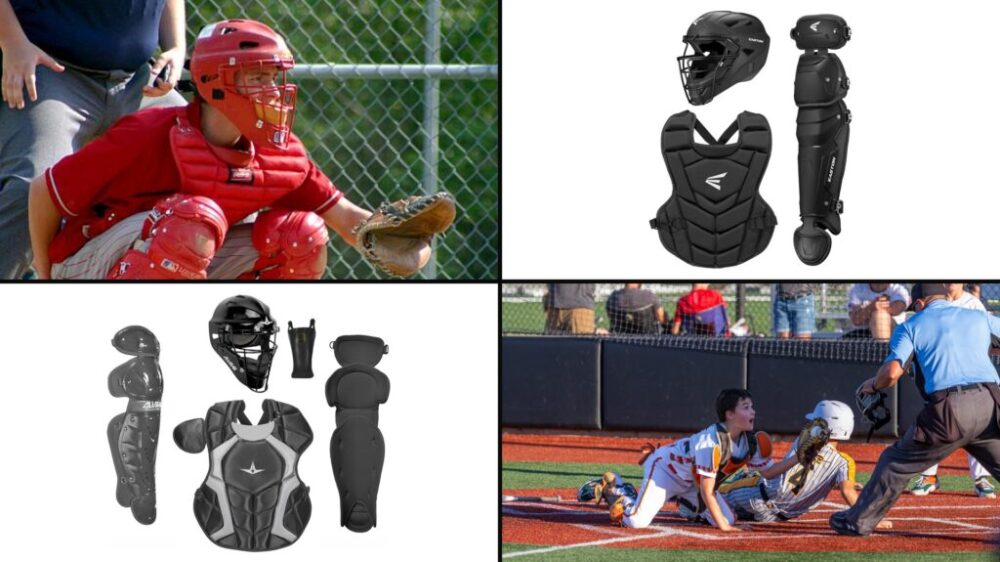
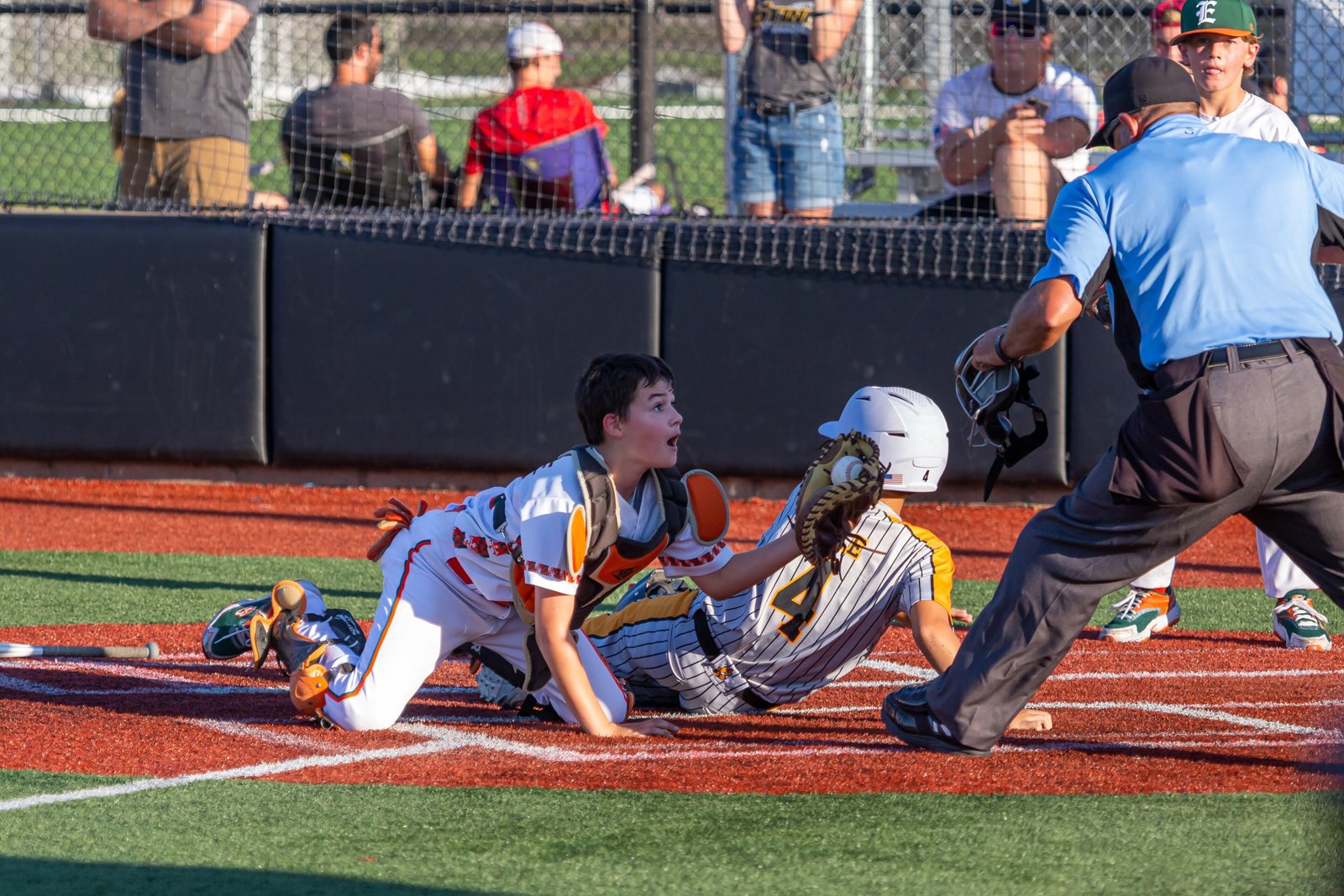
Youth catcher’s gear is four pieces plus a mitt: a NOCSAE-certified helmet, a chest protector, leg guards, and a catcher’s mitt, with a protective cup underneath. For most players ages 9–12, a complete youth set in the roughly $140–$220 range fits fine and lasts a season or two of growth. Buy by measurement, not by the age on the box. Buy the helmet new and certified. And don’t spend $400 on a pro-style box set for a kid who’s still deciding whether he even likes catching.
Below you’ll find how to size each piece, what’s fine to hand down, the pitcher-who-catches rule most parents miss, and six honest picks. Disclosure: NTX Select Baseball earns a small commission on qualifying Amazon purchases, at no extra cost to you.
What a youth catcher actually needs
Skip the bag of extras. Here’s what a young catcher needs on day one:
- Helmet with mask. Hockey-style or a two-piece mask with a skull cap, either works if it carries the NOCSAE stamp. Every set below uses a hockey-style helmet.
- Chest protector. Youth sizes run about 13–15 inches long.
- Leg guards. They should cover from the kneecap down to the top of the shoe.
- Catcher’s mitt. A real mitt with a deep pocket and heavy padding. An infield glove will hurt his hand by the third inning.
- Protective cup. This one isn’t optional at catcher. Buy a cup and compression shorts that fit him now.
Knee savers and a throat guard are nice to have. Everything else, like padded wristbands, branded bags, and pro-model masks, can wait until he’s caught a full season. If you’re building the rest of the kit, our North Texas select baseball gear guide covers bats, gloves, cleats, and the tournament basics.
How to size youth catcher’s gear
Age ranges on the box are a starting point, and kids don’t grow on schedule. Measure him and try the gear on in the crouch, not standing in the kitchen.
- Helmet: Sized by hat size or head circumference. The Easton Black Magic 3.0 youth helmet lists a 6 1/8 to 7 hat size (19 3/8 to 22 inches around), and the Rawlings Players Series youth helmet lists 6 1/2 to 7. Measure around the head just above the eyebrows. The helmet should not rock when he shakes his head.
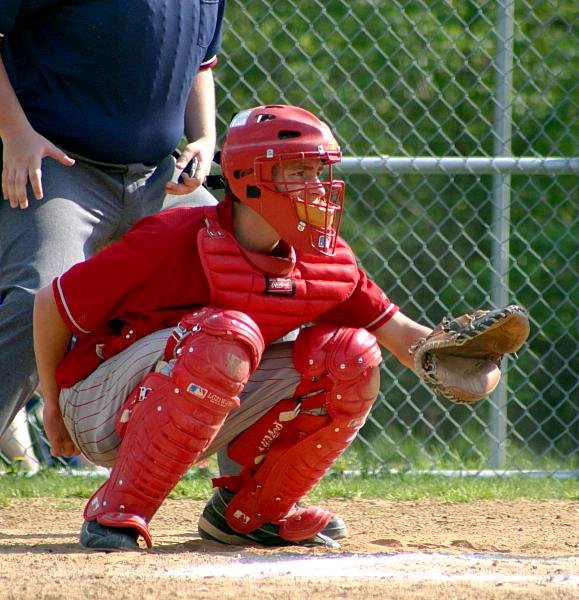
- Chest protector: In his crouch it should reach from the collarbone to just above the belt, without poking him in the chin or riding up into his throat.
- Leg guards: The knee cup should sit on the kneecap, and the bottom should reach the shoelaces. When he squats, the guards should not dig into the top of his thigh.
- Mitt: Youth catcher’s mitts usually run about 31 to 33 inches. Smaller is easier to close for a 9- or 10-year-old.
One more sizing note: the jump from 12U to 13U usually means bigger, harder-throwing pitchers and more time behind the plate. If he’s moving up, our 10U to 13U age-group breakdown explains what changes at each level, and it’s a good time to check whether last year’s set still covers him.
Buy new vs. hand down
Catcher’s gear is one of the few places where secondhand makes real sense, with one exception.
- Helmet: buy new. Look for the NOCSAE stamp, and skip any used helmet with cracks, a bent cage, missing padding, or no readable certification label. Fit matters more than brand.
- Chest protector and leg guards: hand-downs are fine if the straps and buckles work and the padding is not flattened.
- Mitt: his own. A mitt breaks in to one hand. A used one is fine if it fits him and the laces are solid.
- Cup: new. Obviously.
The pitcher-who-catches rule most parents miss
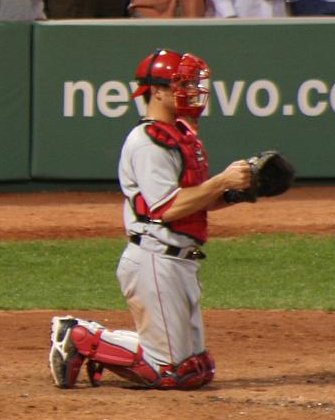
Before you buy gear, ask the coach how he plans to use your kid. MLB and USA Baseball’s Pitch Smart guidelines for ages 9–12 say to avoid playing catcher while not pitching, because catching adds a lot of throws on top of pitching. Little League makes it a rule: under its regular season pitching rules, a player who catches four or more innings in a game can’t pitch that day. A player who catches three innings or less and then throws 21 or more pitches can’t go back behind the plate that day.
Select tournaments set their own pitching rules, so check your event’s rules page. But the principle holds everywhere: if your 11-year-old is the team’s best arm and its only catcher, that’s a workload problem, not a compliment. Asking how the team plans to split catching is a fair question at any offer meeting.
Our picks: youth catcher’s gear by budget
We checked these on Amazon on October 28, 2026. Prices move a lot by size and color, so treat them as ballpark figures.
1. Wilson EZ Gear 2.0 Catcher’s Kit: the starter set
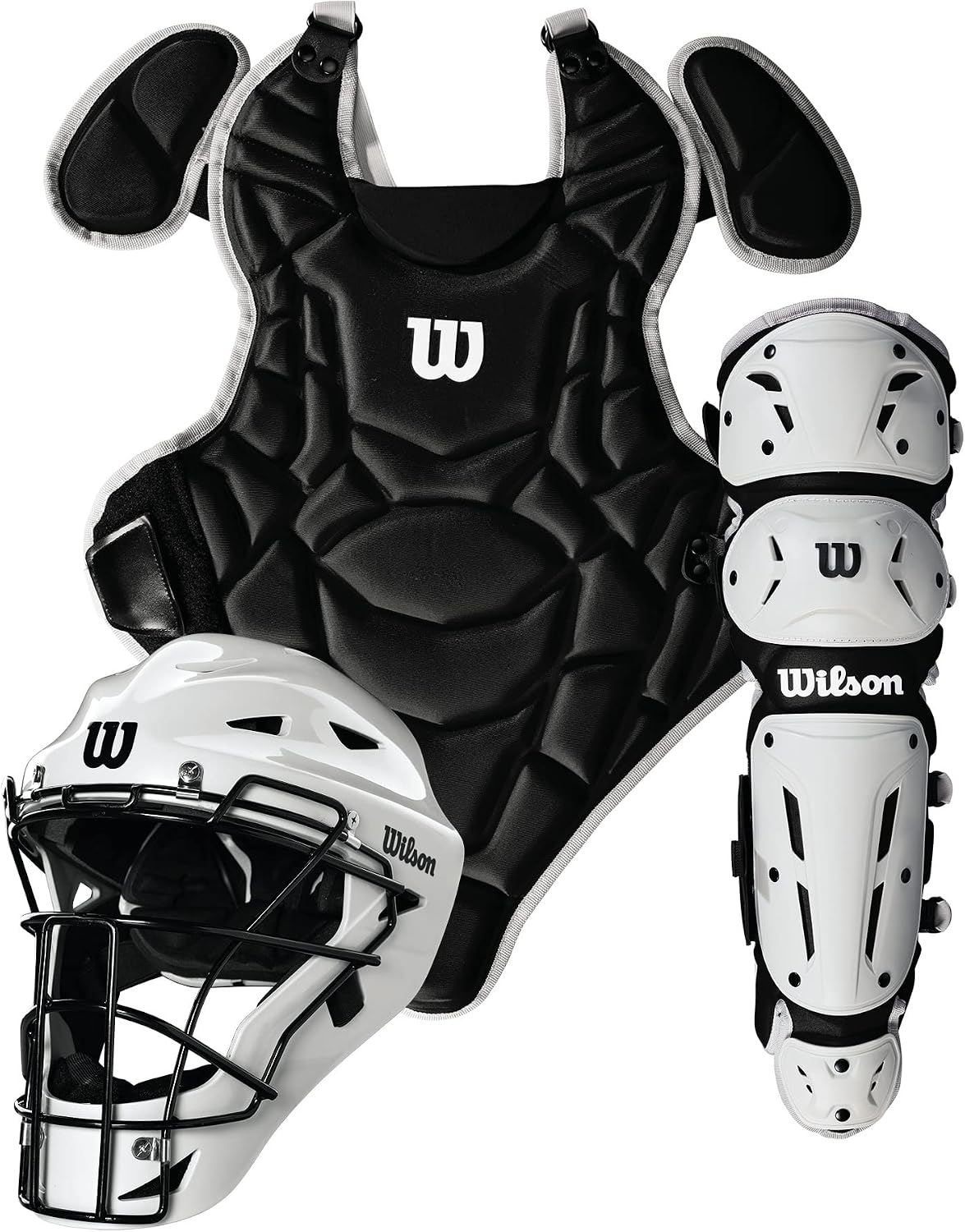
The budget lane for a kid trying the position. Wilson lists S/M for ages 5–7 and L/XL for ages 7–12, with an 11- or 13-inch chest protector and 10.5- or 12-inch leg guards, and the helmet meets the NOCSAE standard. The quick-adjust straps help when a parent volunteer is suiting up a different kid every inning.
- Best for: First-year catchers, rec-to-select transitions, and a team’s spare set
- Watch-outs: L/XL leg guards top out at 12 inches, so a tall 11- or 12-year-old may outgrow them fast
- Budget lane: About $125–$180 depending on size and color
2. Easton Black Magic 3.0 Youth Set: the 9–12 sweet spot
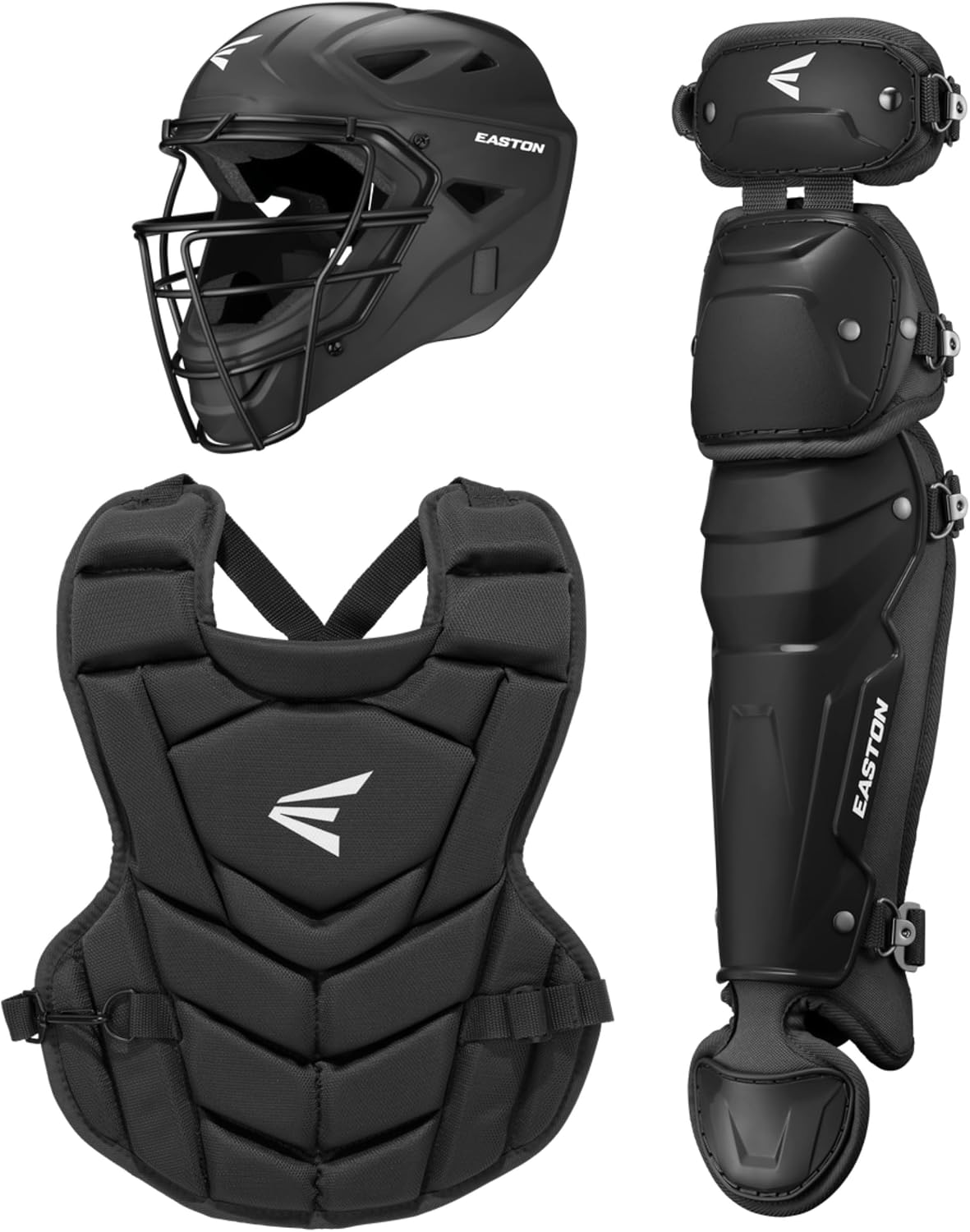
For most 9- to 12-year-old select catchers, this is the set to buy. The Youth Large size is listed for ages 9–12, with a 13.5-inch chest protector, 13-inch leg guards, a NOCSAE-certified helmet, and a steel mask. It’s sized for kids rather than shrunk down from an adult set.
- Best for: Committed 9U–12U catchers who’ll catch most weekends
- Watch-outs: Youth Medium (ages 6–9) and Youth Large look alike in photos, so double-check the size before you check out
- Budget lane: About $155–$180
3. All-Star Player’s Series Youth Kit: the step up
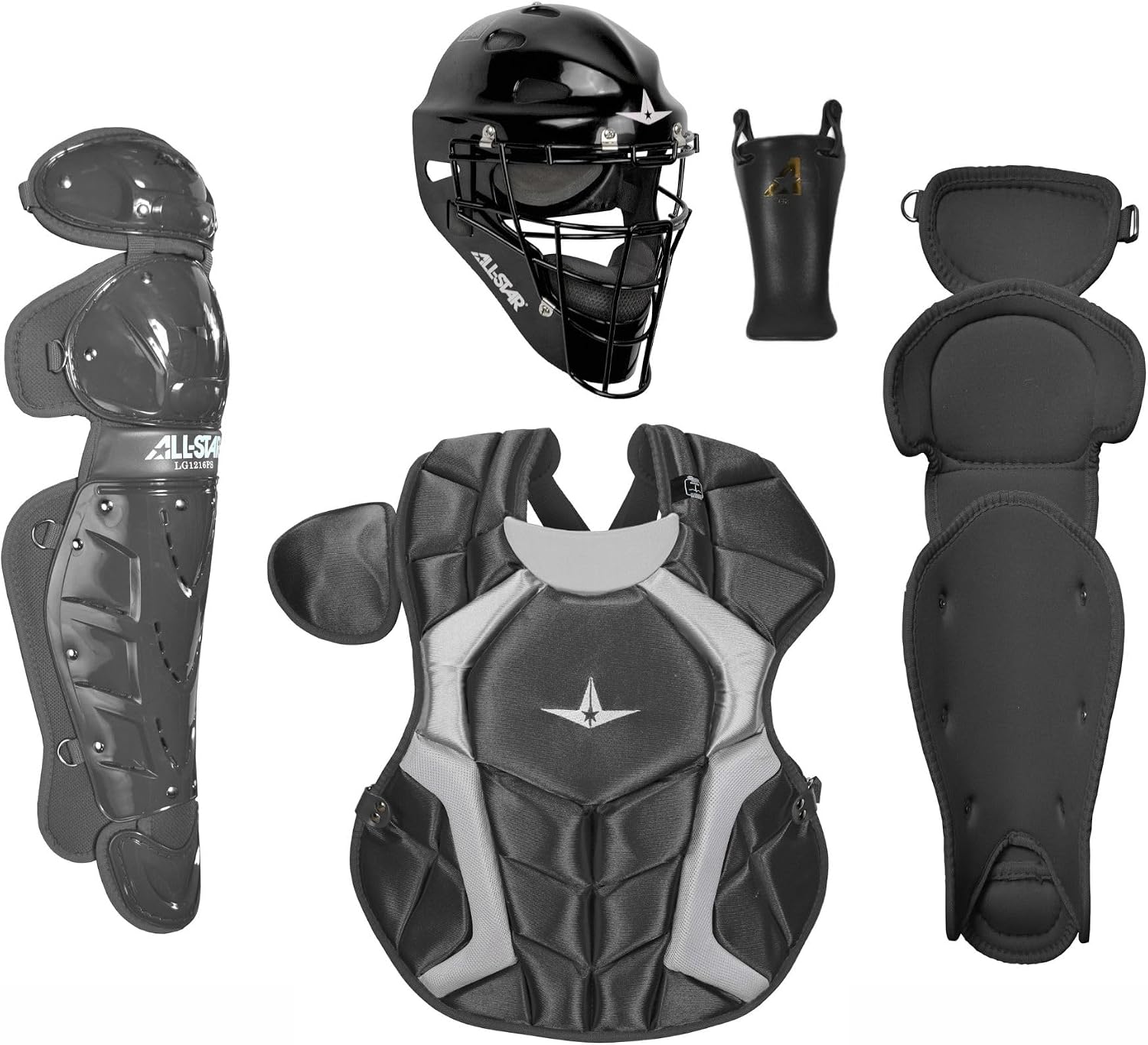
All-Star is best known for its catcher’s gear, and this kit includes a throat guard, which a lot of youth sets leave out. The chest protector has internal protective plates and a 4-point adjustable harness. The listing says it’s NOCSAE certified and rates it for ages 7–16, which is a very wide range, so measure first.
- Best for: A kid who’s clearly going to be a catcher for the next few years
- Watch-outs: Costs more than the Easton without a big jump in what you get at age 10, and the 7–16 range depends on the size you pick
- Budget lane: About $200–$220
4. Rawlings Players Series Youth Catcher’s Helmet: buying the helmet alone
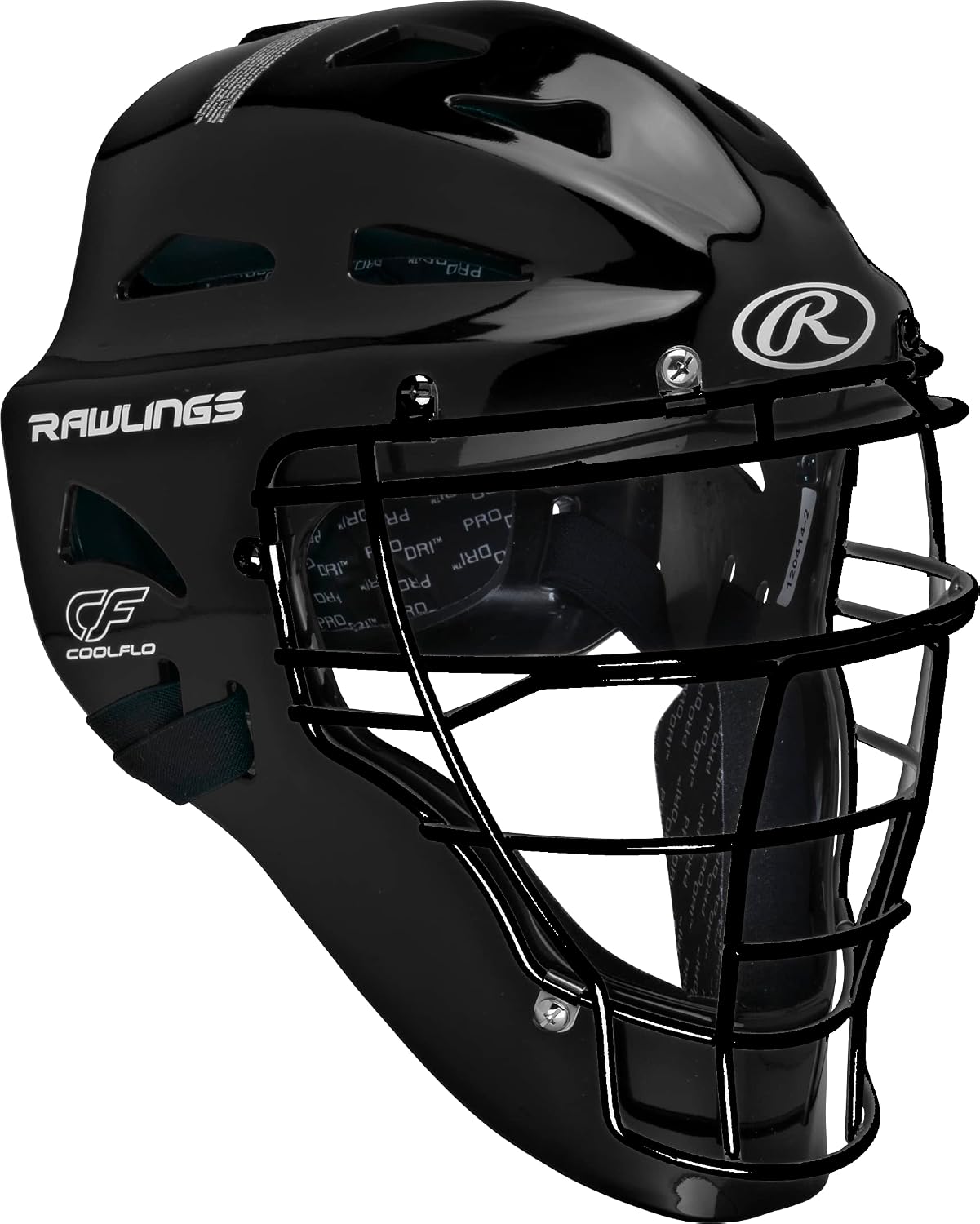
If you got a hand-me-down chest protector and leg guards, this is how you buy the one piece that should be new. It’s a hockey-style helmet that meets the NOCSAE standard, sized 6 1/2 to 7 inches, with an ABS shell.
- Best for: Families piecing together a set from hand-downs
- Watch-outs: This listing is the 6 1/2 to 7 youth size, so measure first; a bigger head needs a junior or larger model
- Budget lane: About $65–$70
5. Rawlings Select Pro Lite 32″ Catcher’s Mitt: a mitt he can close
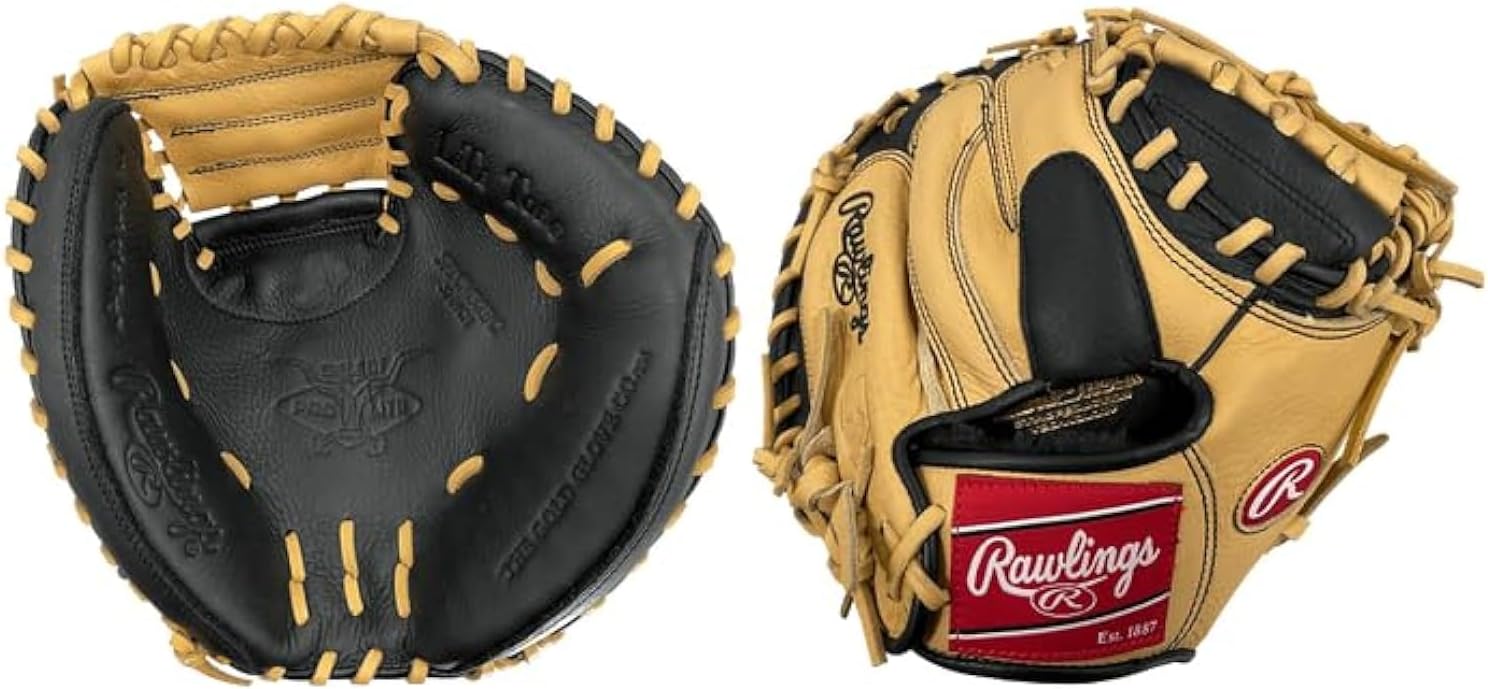
Rawlings built this 32-inch mitt with a youth pro taper fit for smaller hands, and lists it as only 20% player break-in, so it’s close to game-ready out of the box. That matters, because young catchers drop pitches when the mitt is too stiff to squeeze. Most complete sets don’t include a mitt, so budget for it separately.
- Best for: 9U–12U catchers moving out of a first-base or infield glove
- Watch-outs: A 32-inch youth mitt will feel small by 13U or 14U, so plan on replacing it
- Budget lane: About $70
6. Rawlings Youth Catcher’s Knee Savers: the cheap add-on that helps
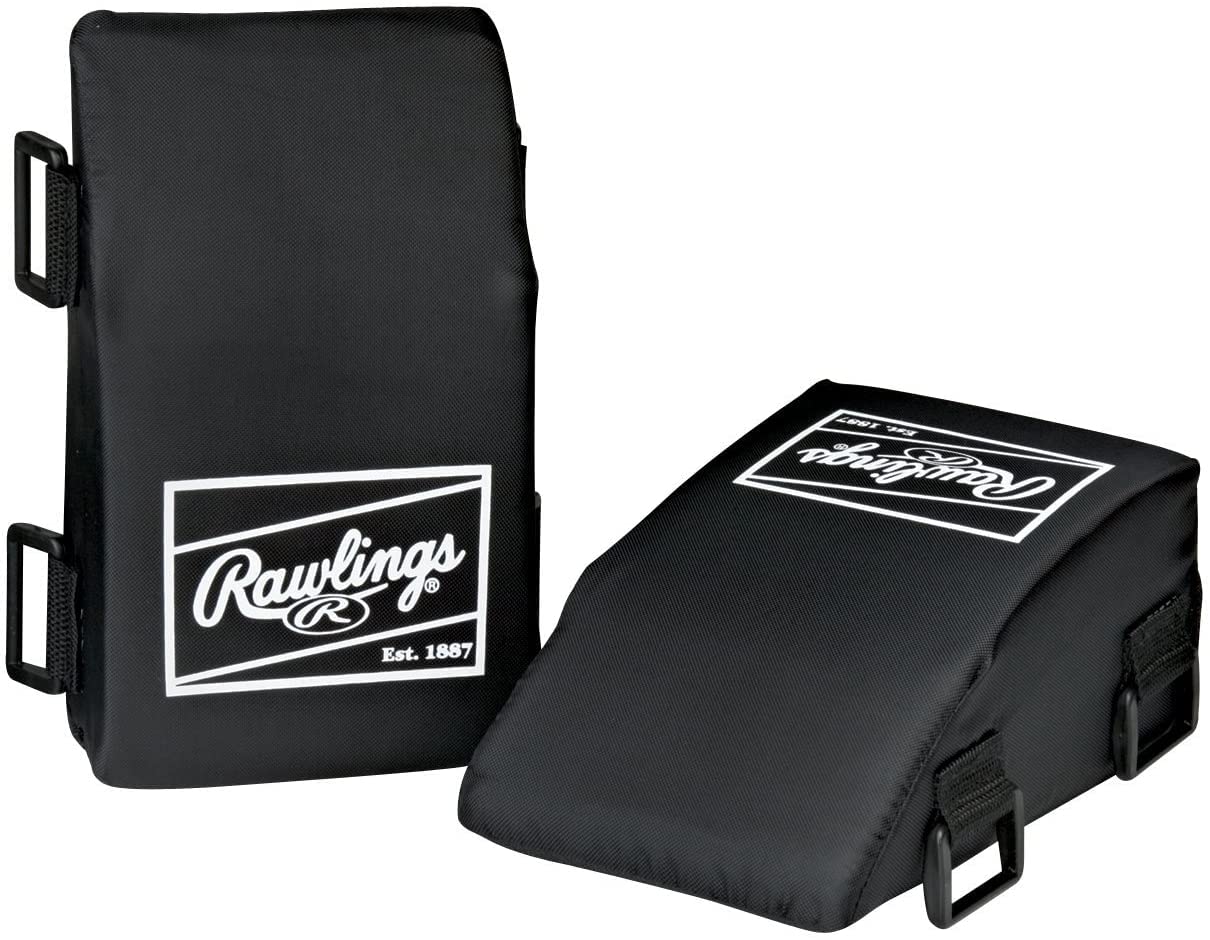
Knee savers are wedges that attach to the leg guards and give him something to sit on between pitches. Rawlings lists these for ages 9–12, and they attach to any catcher’s leg guard. In a five-game tournament weekend, a kid who can rest in his crouch is a kid who still blocks balls on Sunday.
- Best for: Catchers who catch doubleheaders or full tournament weekends
- Watch-outs: They’re a comfort piece, not a fix for bad squat mechanics
- Budget lane: About $28
What not to overbuy
The top shelf is real gear, but it’s built for older, bigger players. The same Amazon search on October 28 turned up the Easton MAV X set at $459.99 and the Mizuno Samurai boxed set at $372.77. A 10-year-old won’t catch better in either one, and he’ll probably outgrow it before it wears out. Spend the difference on lessons from someone who teaches receiving and blocking, or on a second cup and extra compression shorts for doubleheaders.
Also skip the giant branded catcher’s bag until he needs it. Most youth sets fit in a roomy wheeled bat bag, and our travel baseball bag guide covers the ones that hold catcher’s gear without turning into a suitcase. For the mitt itself, our 2026 baseball glove buying guide covers break-in and sizing in more detail.
A North Texas note on heat
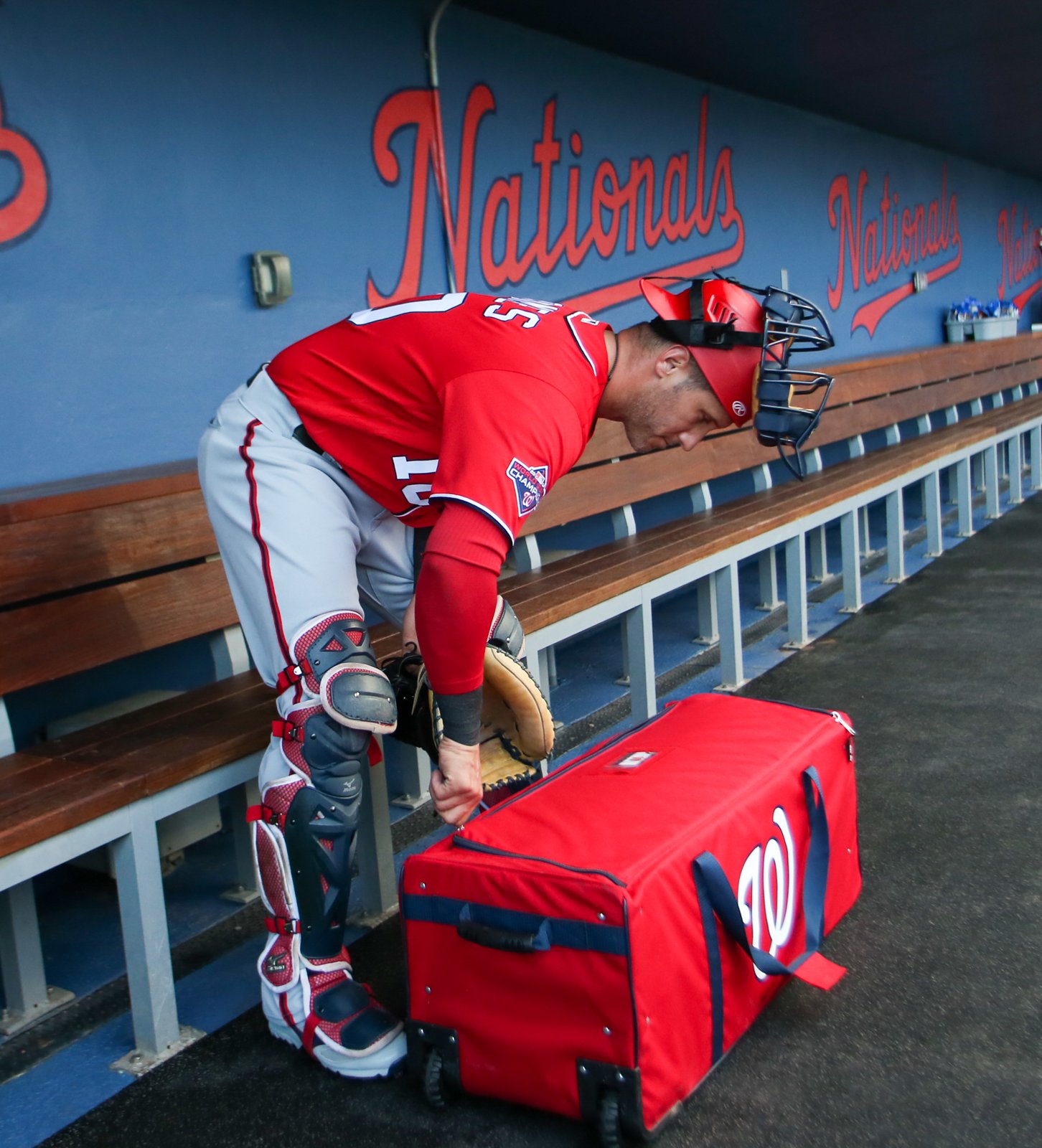
Catchers wear the most gear on the hottest field position, and North Texas summer tournaments regularly run in triple digits. Pick a helmet with real venting, pack a second undershirt, and have him take the helmet off and drink between every half inning, not just between games. If he goes quiet, gets dizzy, or stops sweating, take him out of the gear and get him cool. No tournament game is worth that.
Youth catcher’s gear FAQ
Do I need to buy catcher’s gear for a 9U or 10U select team? Many teams keep a team set, so ask before you buy. If your kid will catch most innings, his own set will fit better and is more sanitary.
Is a hockey-style helmet better than a two-piece mask? Both are fine if they’re NOCSAE certified and fit. Hockey style is the youth default because it stays on during pop-ups and protects the back of the head.
Should my kid catch and pitch? Pitch Smart says to avoid catching on days he’s not pitching, and Little League limits the combination. Talk to the coach about the plan, and see our youth baseball position guide for how coaches usually split up positions.
Bottom line
Measure him, buy a youth set that fits now, buy the helmet new and certified, and add a real mitt and a cup. For most 9- to 12-year-olds, that’s about $200 to $300 all in, not $500. Save the pro gear for when he’s 14 and still wants to catch.